
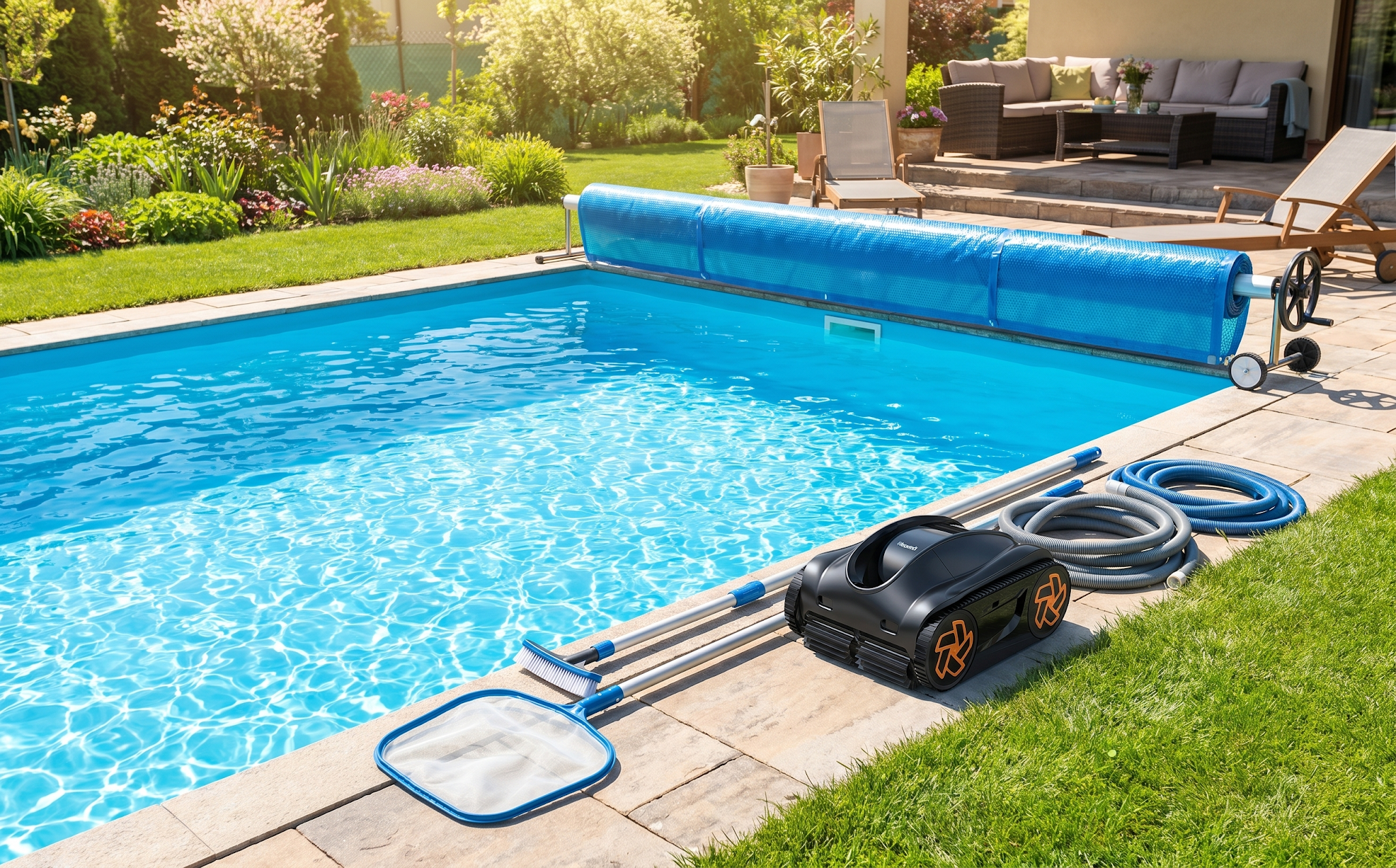
When warm weather arrives, many pool owners begin thinking about getting the pool ready for regular use. The process does not have to be complicated, but a few key steps can help make the transition smoother.
This guide covers what to check before the season starts, how to handle the first few days of operation, and what a basic weekly routine might look like.
What Changes When Summer Arrives
Warmer water and more sunlight create conditions that require a slightly different approach to pool care. Sanitizer is used up more quickly, and organic debris such as leaves and pollen becomes more common.
The goal during this transition period is to establish a routine that accounts for these changes. Most residential pools respond well to consistent, simple maintenance habits.
Before the Warm Weather Arrives
Inspecting Your Equipment
If the pool was covered during the cooler months, start by removing and cleaning the cover. Check for tears or signs of wear before storing it.
Inspect the pump, filter, and any other equipment for visible damage. Look for cracks in hoses or connections. If anything appears worn, it is better to address it before the system is running regularly.
If you are unsure about any part of the equipment, a pool professional can perform a quick inspection and provide recommendations.
Clearing Debris and Preparing the Water
Remove any leaves, dirt, or other debris from the pool surface and floor. A skimmer net and a pool vacuum are the standard tools for this task.
Check the water level. If it dropped during the off-season, refill it to the middle of the skimmer opening using a garden hose.
Once the debris is removed and the water level is correct, turn on the circulation system and check for leaks or unusual noises.
The First Few Days of Operation
Water Treatment
After the equipment has been running for a few hours, test the water. Check the sanitizer level, pH, and alkalinity. If any levels are outside the recommended range, adjust them gradually.
Many homeowners choose to shock the pool in the evening during the first few days of operation. This is a common step that can help the water adjust to the change in conditions.
Always follow the instructions on your test kit and any chemical products. If you are uncertain, a local pool store can help interpret your test results.
Ongoing Cleaning
During the first week, debris that was not visible during the initial cleaning may appear as the water circulates. Skim the surface daily and vacuum the floor as needed.
Brushing the walls and waterline once during this period can help remove any residue that accumulated over the off-season.
A robotic pool cleaner may be used to support daily debris removal during this transition. It runs on its own schedule and can help maintain a cleaner floor without requiring manual attention each day.
A Simple Weekly Routine
Once the water is clear and levels are stable, a weekly routine is usually enough to maintain the pool during summer. Below is an example of what such a routine might include.
- Test water chemistry (sanitizer, pH, alkalinity)
- Remove debris from the surface and floor
- Brush walls and waterline
- Check the filter pressure and clean if needed
- Run the circulation system for an adequate number of hours each day
These steps cover the basic areas that affect water quality. Adjust the frequency based on how often the pool is used and the local weather conditions.
Signs That Your Pool May Need Extra Attention
Even with a consistent routine, occasional issues can arise. Being aware of early signs can help you address them before they become more significant.
- Water that becomes cloudy or changes color despite regular testing
- A noticeable drop in water level that is not related to evaporation
- Equipment making unusual sounds or showing inconsistent pressure readings
- A strong or unusual odor coming from the water
If any of these occur, start by testing the water and checking the equipment. If the issue does not resolve within a reasonable time, a pool professional can help diagnose the cause.
Every pool is different. Factors like local climate, pool usage, and equipment type can all affect what routine works best for a particular setup. Paying attention to how the water responds to different conditions over the first few weeks can help you fine-tune your approach over time.
A Simple Start to the Summer Season
Getting a pool ready for summer does not require a complex process. A few basic steps before the season starts, attention during the first few days, and a consistent weekly routine are often enough.
The key is observation. Testing the water, keeping an eye on the equipment, and addressing small issues early can help prevent larger problems later in the season.

Leave a Reply